

Running an online store means your bookkeeping has to handle a volume and variety of transactions that a traditional shop rarely sees. Every sale can involve the sales platform, a payment processor, a bank deposit, a marketplace commission, shipping charges, and sales tax collected—all of which need to be recorded separately and tied back to the original order. Without a system built for these moving parts, records quickly fall behind and the numbers stop telling you how your business is actually performing.
We work with online sellers who face the unique bookkeeping challenges of running an e-commerce business. The good news is that these challenges follow predictable patterns. Once you identify where the complexity comes from, you can put processes in place to keep clean books, meet your tax obligations, and use your financials to make better decisions.
E-commerce vs. Traditional Bookkeeping: Key Differences
Traditional bookkeeping often relies on simple invoices and point-of-sale receipts. E-commerce replaces those with platform payouts, payment processor deposits, and marketplace reports that bundle many orders together. The differences go deeper than just the source documents.
- Revenue sources: Instead of one cash register, you may sell through your own website, Amazon, Etsy, social media shops, and wholesale channels—each with its own reporting format and settlement timing.
- Expense types: On top of cost of goods sold, you have payment processing fees, platform commissions, advertising costs, shipping charges, and software subscriptions that need to be tracked as separate accounts.
- Inventory tracking: Stock may sit in a warehouse, a 3PL, or with a dropshipper, and it must sync across all sales channels in near real time.
- Sales tax complexity: Online sales can create obligations in multiple jurisdictions based on where your customers are, not just where your business is located.
- Reporting frequency: Many e-commerce businesses need weekly or even daily visibility into cash and margins, not just a monthly statement.

High Transaction Volumes and Data Management
A single busy week can produce thousands of individual orders, each generating multiple ledger entries. Manual data entry quickly becomes impossible, and even with accounting software, the real challenge is ensuring that every platform, processor, and bank deposit agrees with your books.
Multi-Channel and Multi-Platform Sales Reconciliation
Selling on multiple channels means each platform sends you a different summary of activity. One channel may report gross sales while another reports net sales after fees, and settlement dates often lag the sale date by days or weeks. The only reliable way to keep accurate records is to reconcile each platform’s payout report against your bookkeeping entries line by line at least once per week.
We typically follow a three-step process for every sales channel: match the deposit to the payout report, separate sales revenue from fees and refunds, and attach supporting documentation for any adjustments. This prevents the common error of recording the entire lump-sum deposit as revenue, which overstates income and can lead to incorrect sales tax filings.
Payment Processor and Marketplace Fee Accounting
Payment processors like Stripe, PayPal, and Square charge transaction fees that are deducted before funds reach your bank. Marketplaces such as Amazon and Etsy add their own commission and fulfillment fees. Each of these charges must be recorded as an expense, not netted against sales, so you can see your true gross revenue and your true operating costs.
Without this separation, your profit margins will look artificially high or low, and you will have no way to identify which channel is actually profitable. We recommend creating dedicated expense accounts for each processor and marketplace fee type, then mapping them automatically through your accounting software’s rules.
Integrating E-commerce Platforms with Accounting Software
Manual imports are prone to duplicate entries, missed fees, and timing errors. A reliable integration between your e-commerce platform and your accounting software—such as a connector that pulls daily orders, fees, refunds, and inventory changes into your ledger—removes most of the manual work.
But integration is not a set-it-and-forget-it solution. You still need to review the mapping, especially when you add a new product line, change payment processors, or offer a new discount type. We review the integration logs and error reports at the end of every month to catch anything that failed to sync.
Sales Tax Compliance: GST/HST and PST
Online sellers must collect and remit federal and provincial sales taxes on taxable supplies, and the rules depend on where the buyer is located and where the goods are shipped from. Even if you operate from a single location, sales to customers in other provinces or countries can create obligations you need to track.
The biggest bookkeeping mistake we see is recording only the net deposit from a sales channel and losing the breakdown of tax collected. Without that breakdown, you cannot file accurate GST/HST returns or provincial sales tax returns. We recommend setting up your platform to calculate tax automatically, then mapping the tax portion of each transaction to a dedicated sales tax liability account in your books.
At minimum, you need to know three things for every taxable sale: the tax amount collected, the jurisdiction that tax belongs to, and the date of the sale. This level of detail becomes especially important if you sell through marketplaces that may collect and remit tax on your behalf for some transactions but not others.

Inventory Management and Cost of Goods Sold Tracking
Inventory is often the largest asset on an e-commerce balance sheet, and getting its bookkeeping wrong distorts both your profit and your cash position. The goal is to know exactly what stock you hold, where it is, what it cost, and when it becomes an expense.
Inventory Management Across Multiple Warehouses and Fulfillment Models
If you use a third-party logistics provider, dropshipping, or your own warehouse, each location has its own inventory records. Sales from different channels may pull from different warehouses, and returns may go back to a different location than the original shipment. A stock transfer between warehouses is not a sale, but it must be recorded in your books so that inventory valuation stays accurate.
We recommend using an inventory management system that syncs with both your sales platforms and your accounting software. This allows you to track quantities and costs per location and automatically update your balance sheet as goods move in and out. Regular physical counts or cycle counts are still necessary to catch shrinkage, damage, and data entry errors.
Cost of Goods Sold (COGS) Tracking
COGS includes the purchase cost of the product, freight-in, duties, packaging, and any other costs directly tied to getting the product ready for sale. It does not include shipping to the customer, which is a separate expense. The timing matters: inventory purchases sit on the balance sheet as an asset until the item sells, then the cost moves to COGS on the income statement.
Without accurate COGS, your gross margin report is useless, and you cannot tell which products are actually profitable. We see sellers who accidentally expense their entire inventory purchases in the month they buy, which understates profit in that month and overstates it later. Using a perpetual inventory method with FIFO or weighted average costing keeps COGS aligned with actual sales.
Revenue Recognition and Returns Management
Recording revenue at the right time is more complicated online because payment, shipment, and settlement often happen on different dates. Returns and refunds then reverse some of that revenue, and if they are not tracked correctly, your income statement will be wrong.
Revenue Recognition for Online Sales
Under accrual accounting, revenue is recognized when you have fulfilled your obligation to the customer—typically when the goods ship, not when the order is placed or when the payout hits your bank. If you offer pre-orders, subscriptions, or gift cards, you may need to defer revenue until the goods or services are delivered.
Cash-basis bookkeeping, where revenue is recorded when payment is received, is simpler but rarely gives an accurate picture of profitability for an e-commerce business. We help sellers move to accrual by setting up order-level tracking that ties the sale date, shipment date, and payout date together.
Managing Returns and Refunds
Online return rates are typically higher than in-store, and every return involves multiple bookkeeping steps: reverse the sale, adjust inventory if the item is restocked, reverse any sales tax collected, and record any refund processing fees. If the returned item cannot be restocked, you also need to write off the cost.
We recommend creating a separate returns and allowances account that nets against revenue, rather than recording returns as an expense. This keeps your gross sales and net sales clearly visible and makes it easier to spot problem products or shipping issues.
Multi-Currency Transactions and Cash Flow Management
Selling to customers in other countries adds another layer of bookkeeping complexity, and delayed payouts from marketplaces create cash flow gaps that catch many sellers off guard.
Currency Conversion and International Sales
When you receive payments in foreign currencies, your bank or processor converts them at an exchange rate that may differ from the rate on the sale date. These differences create foreign exchange gains or losses that must be recorded separately. Your accounting software should support multi-currency transactions, but you still need to decide which exchange rate to use for reporting and keep consistent records.
We recommend setting a policy for exchange rates—for example, using the rate at the transaction date for revenue and the settlement date rate for the bank deposit—and sticking to it. This keeps your monthly reports consistent and avoids large unexplained adjustments at year-end.
Cash Flow Management with Delayed Payouts
Marketplaces like Amazon and Etsy often hold funds for days or weeks before depositing them into your bank account. Meanwhile, you have to pay suppliers, shipping carriers, and advertising costs immediately. This timing gap is one of the most common reasons e-commerce businesses run into cash shortfalls even when they are profitable on paper.
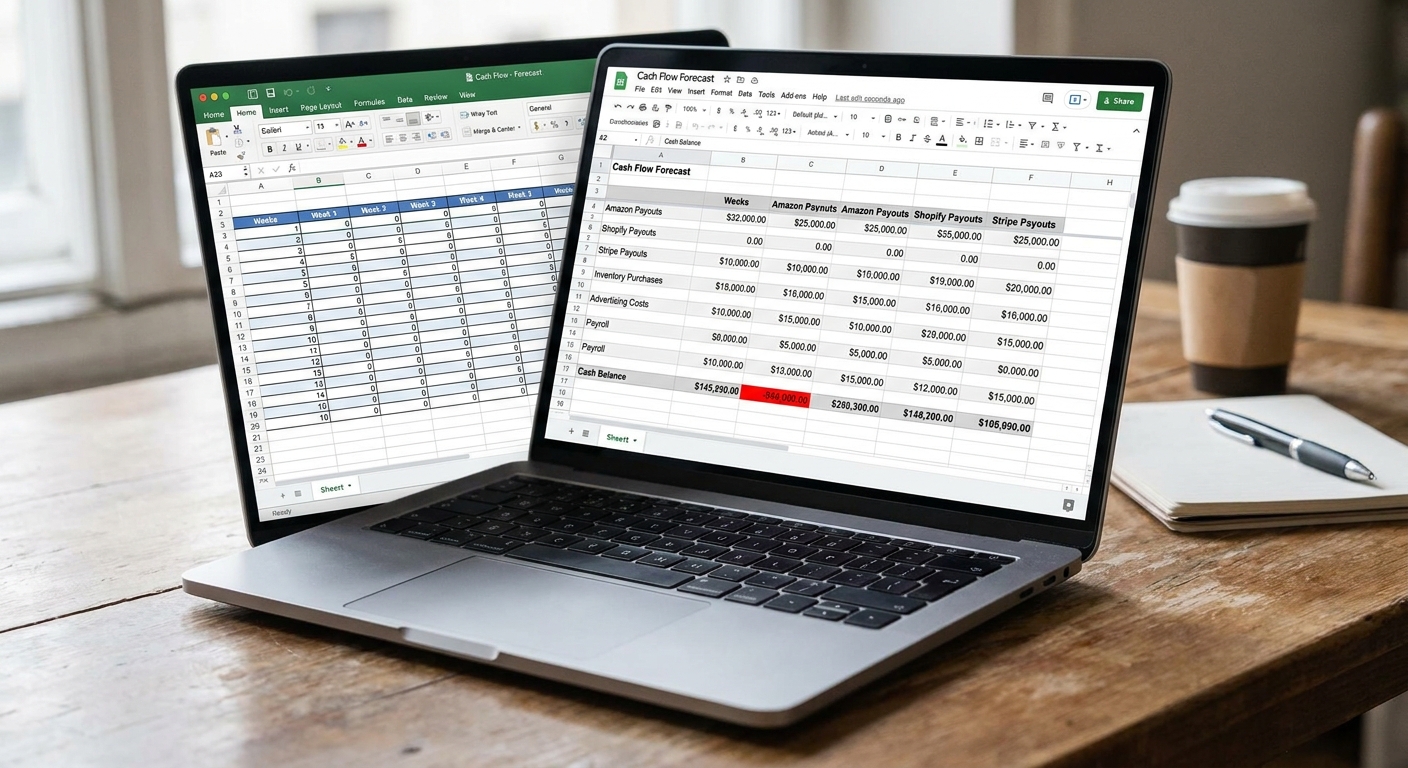
We help sellers build a 13-week cash flow forecast that uses payout schedules, known fixed costs, and upcoming inventory purchases. That forecast highlights the weeks when cash will be tight, so you can adjust payment timing or arrange a line of credit before you need it.
Conclusion
The unique bookkeeping challenges of running an e-commerce business come from the sheer number of moving parts: multiple sales channels, bundled payouts, processor and marketplace fees, sales tax obligations, inventory across locations, returns, currencies, and delayed cash. Each one is manageable on its own, but together they demand systems and processes that most generic bookkeeping setups do not provide.
We help online sellers build a bookkeeping foundation that keeps every order, fee, and tax dollar in the right account from day one. If you are tired of reconciling payout reports by hand or unsure whether your sales tax filings are correct, let us review your current books and set up a workflow that fits your store.