

Choosing between a bookkeeper vs. accountant: which does your small business need is not just about job titles—it’s about the health of your financial records and the quality of the decisions you can make from them. We often meet owners who have been doing their own books or who hired a professional without clarity on the role, and the confusion costs time and money.
In short, a bookkeeper records and organizes daily transactions so your financial data is accurate and current. An accountant uses that data to analyze performance, prepare tax filings, and offer strategic advice. The best choice depends on your business stage, complexity, and goals—and many small businesses benefit from both professionals working together.
What Does a Bookkeeper Do?
A bookkeeper is the day-to-day custodian of your financial reality. Their work ensures every dollar that moves in or out of your business is captured, categorized, and reconciled. Without this foundation, even the best accountant is working with incomplete information.
Recording Daily Financial Transactions
Bookkeepers record all sales, purchases, receipts, and payments. They post debits and credits, produce invoices, and often manage payroll. This is not just data entry; it requires consistent categorization so reports are reliable.
Maintaining Ledgers and Bank Reconciliation
The general ledger is where all transactions come together. Bookkeepers maintain this master record, whether in a spreadsheet or accounting software. They also reconcile bank and credit card accounts every month to catch errors, missing entries, or unauthorized charges before they become bigger problems.
Managing Accounts Payable and Receivable
Bookkeepers track what your business owes suppliers and what customers owe you. They schedule bill payments, follow up on unpaid invoices, and keep cash flow visible. This operational oversight keeps the business running smoothly day to day.

What Does an Accountant Do?
An accountant builds on the bookkeeper’s clean data to interpret what the numbers mean for your business. Their work is less about recording and more about evaluating, advising, and ensuring compliance with tax laws and regulations.
Financial Analysis and Reporting
Accountants review the financial statements—income statement, balance sheet, and cash flow statement—to assess profitability, liquidity, and trends. They prepare adjusting entries for items like depreciation and accrued expenses, and they ensure reports meet professional standards.
Tax Preparation and Planning
Accountants prepare and file tax returns, but their value extends to year-round planning. They identify credits and deductions, recommend timing of income and expenses, and help you avoid penalties by staying ahead of filing obligations.
Strategic Business Advisory
Beyond compliance, accountants use financial data to guide big decisions: Should you invest in equipment? Hire staff? Expand into a new product line? They provide forecasts and scenario analysis to answer these questions with confidence.
Bookkeeper vs. Accountant: Key Differences
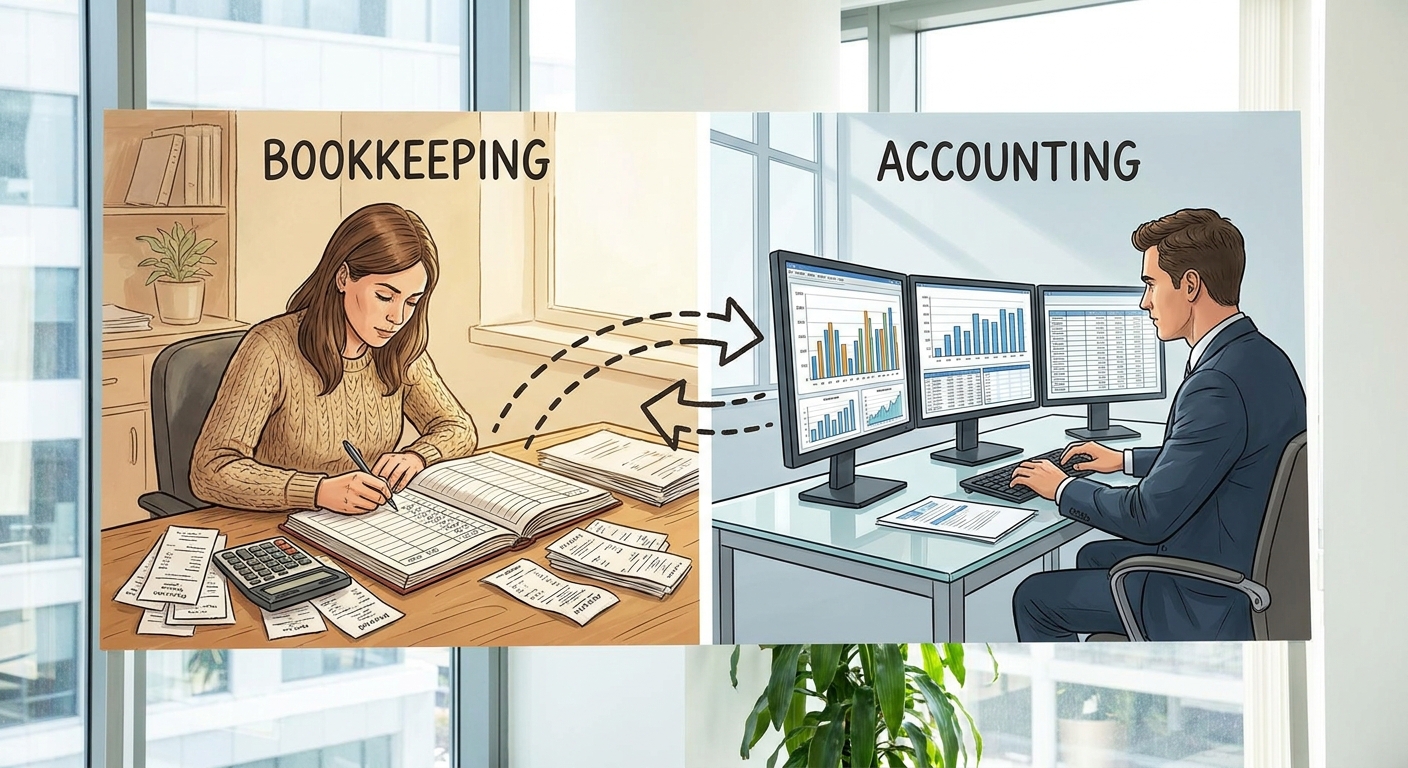
The simplest way to separate the roles is this: bookkeeping turns daily activity into organized records, while accounting turns those records into insights. One is transactional; the other is analytical.
Transactional vs. Analytical Work
Bookkeeping focuses on capturing and organizing every transaction. Accounting interprets patterns in that data, asks why margins changed, and recommends action. The accountant’s work is more subjective because it involves judgment calls about estimates, accruals, and strategy.
Focus on Accuracy vs. Insight
A bookkeeper’s primary goal is accuracy and completeness. An accountant’s primary goal is insight and compliance. Both are essential, but they require different mindsets and skill sets.
Tools and Software Used
Both roles use accounting software like QuickBooks, Xero, or similar platforms. A bookkeeper uses the transaction entry, bank feed, and reconciliation features daily. An accountant uses the same data to generate reports, run what-if scenarios, and prepare tax-ready financials. The software may be the same, but the level of use is very different.
Bookkeeper vs. Accountant: When to Hire Each or Both
The decision depends on your business’s size, transaction volume, and goals. We typically recommend starting with a bookkeeper if your books are behind or inconsistent, and adding an accountant when you need tax filings, financial analysis, or strategic planning.
Signs You Need a Bookkeeper
- You fall behind on entering receipts and invoices.
- Your bank reconciliations are overdue or inaccurate.
- You spend too many evenings on data entry instead of running your business.
- Payroll, AP, or AR tasks are slipping through the cracks.
Signs You Need an Accountant
- You need to file tax returns and want to minimize your liability legally.
- You’re making major decisions like buying equipment, hiring, or expanding.
- You need financial statements for lenders or investors.
- You face an audit or notice from the tax authority.
Situations Requiring Both Professionals
Most growing businesses benefit from both. A bookkeeper keeps records current every week, while an accountant reviews the books monthly or quarterly, files taxes, and advises on strategy. This division of labor prevents burnout and reduces errors.
5 Things Accountants Can Do That Bookkeepers Can’t
Some services are legally or professionally limited to accountants with the right credentials. Understanding these boundaries helps you build the right team from the start.
Tax Advice and Filing
While a bookkeeper can organize tax documents, only an accountant should advise on tax strategy, prepare tax returns, and sign off on year-end filings. Tax law is complex and changes often, so this expertise matters.
Financial Audits and Assurance
Accountants perform internal audits to verify that financial records are accurate and controls are effective. They can also provide assurance services that give lenders or investors confidence in your numbers.
Business Forecasting and Budgeting
Accountants build forward-looking models that turn historical data into projections. They can stress-test scenarios and help you budget for growth, cash flow gaps, or seasonal swings.
Entity Structure and Compliance
Whether you operate as a sole proprietorship, partnership, or corporation, an accountant can advise on the most tax-efficient structure and ensure you meet all filing and regulatory obligations.
Tax Authority Representation and Dispute Resolution
If you receive an audit notice or dispute a reassessment, an accountant can represent you before the tax authority, interpret correspondence, and negotiate on your behalf. This is far beyond what a bookkeeper is trained or authorized to do.

Credentials and Qualifications to Look For
Not all financial professionals have the same training. When hiring, verify credentials and experience to ensure you get the expertise you need.
Certified Public Accountant (CPA)
A CPA designation indicates a high level of education, examination success, and ongoing professional development. CPAs are qualified to handle complex tax matters, audits, and financial reporting. If you need more than basic bookkeeping, a CPA is often the right choice.
Bookkeeping Certifications and Training
While bookkeepers are not required to have a license, certifications from recognized bookkeeping organizations demonstrate a commitment to accuracy, ethics, and continuing education. Look for candidates with formal training in double-entry bookkeeping and accounting software.
Industry-Specific Experience
A professional who understands your industry will ask better questions and spot issues faster. For example, a bookkeeper familiar with retail understands inventory and sales tax, while an accountant with restaurant experience knows tip reporting and food cost ratios.
How Bookkeepers and Accountants Work Together
The most effective financial teams treat bookkeeping and accounting as two parts of one workflow. When both roles communicate clearly, the business owner gets accurate books and actionable advice.
Data Handoff: From Bookkeeping to Accounting
At month-end, the bookkeeper closes the books: all transactions are entered, bank accounts reconciled, and accounts receivable and payable confirmed. Then the accountant takes that clean dataset to prepare adjusting entries, review financial statements, and analyze variances.
Collaborative Reporting and Analysis
Accountants rely on the bookkeeper’s accuracy to produce meaningful reports. In turn, the bookkeeper benefits from the accountant’s feedback on categorization or missing entries. Regular check-ins prevent small errors from compounding.
Best Practices for a Seamless Partnership
Use shared cloud-based software with controlled access, document a clear month-end checklist, and schedule a standing review call between bookkeeper, accountant, and owner. In our practice, we have more than 30 years of experience helping small business owners coordinate these two roles. We’ve learned that proactive communication is the single biggest predictor of a smooth financial operation.

Common Misconceptions About Bookkeepers and Accountants
Misunderstandings about these roles lead owners to hire the wrong person—or no one at all. Let’s clear up three common myths.
Myth: Bookkeepers Only Do Data Entry
Modern bookkeepers do much more than type numbers. They manage payroll, handle accounts payable and receivable, reconcile complex bank accounts, and often act as the first line of defense against fraud. A skilled bookkeeper is a systems thinker, not just a typist.
Myth: Accountants Are Only Needed at Tax Time
While tax season is a peak period, accountants add value all year through cash flow monitoring, budgeting, and advisory. Waiting until year-end means missed opportunities to adjust strategy or take advantage of deductions.
Myth: Small Businesses Can’t Benefit From Both Professionals
Even very small businesses can benefit from a bookkeeper handling weekly transactions and an accountant providing quarterly reviews and annual tax filing. As revenue grows, the division of labor becomes even more valuable, allowing the owner to focus on customers and operations.
Questions to Ask When Hiring a Bookkeeper or Accountant
The right professional will welcome these questions. Use them to compare candidates and find a true fit for your business.
Experience with Small Businesses in Your Industry
Ask for examples of clients similar to yours. How do they handle the specific transactions, tax issues, or reporting needs of your industry?
Software and Technology Proficiency
Confirm which accounting platforms they use and whether they can work with your existing systems. Cloud-based tools often make collaboration easier and provide real-time access.
Communication and Reporting Preferences
How often will you receive reports? Will they explain the numbers in plain language? Do they offer in-person meetings or video calls? Clear communication is a cornerstone of a good working relationship.
Engagement Structure and Expectations
Understand who will handle your account, what the onboarding process looks like, and how ongoing support is delivered. Ask about turnaround times for questions and how they handle tax authority correspondence if it arises.
Conclusion: Choosing the Right Financial Partner for Your Business
The bookkeeper vs. accountant decision is not about picking one over the other—it’s about building the right financial foundation for your current stage and future goals. Start by assessing whether your daily records are reliable and whether you need strategic guidance or tax expertise.
Key Takeaways and Next Steps
If your books are disorganized, hire a bookkeeper first. If you need tax filings, forecasts, or audit support, bring in an accountant. Many small businesses thrive with both, working as a coordinated team. Take stock of your pain points, then have conversations with qualified professionals. If you’re still unsure which path fits, contact our office for a confidential conversation about your business goals—we’ll help you clarify the next step without pressure.